All Categories
Featured
Table of Contents
Manufacturers, for circumstances, use WMS for tracking parts and completed goods, facilitating just-in-time production, and reducing waste. Getting and put-away are vital procedures in warehousing, and a WMS supports various activities included in these actions.
This integration is important for frontline warehouse efficiency and ensures that products are stored precisely and rapidly. When items are gotten, the put-away procedure is guided by the WMS, which advises optimum storage areas based on existing inventory levels and warehouse space accessibility.
Stock management is at the heart of efficient warehouse operations, and a WMS plays a critical role in this location. Real-time inventory presence is accomplished through innovations like barcoding and RFID, enabling precise tracking of materials. Understanding precisely what stock you have, its location, and status at any given minute is vital for supply chain management and informed decision-making.
Automatic recognition and information capture (AIDC) innovation consists of methods like barcodes and RFID. Products can be effectively traced utilizing particular identification techniques like lot and serial numbering, ensuring that inventory levels are precise and up-to-date. This not just enhances functional effectiveness however also enhances consumer fulfillment by making sure that orders are satisfied accurately and on time.
Prevent mistakes. Get the only 3PL RFP checklist built for ecommerce brand names, absolutely totally free. Order picking and loading are core steps in the order fulfillment procedure, and a WMS improves efficiency in these areas by directing the storage, retrieval, and packaging of items utilizing numerous picking innovations. Modern WMS supports radio frequency, pick-to-light, pick-to-voice, and even robotics integrations to enhance the picking process.
Seamless Inventory Sync across All Sales ChannelsComparing Manual vs Automated Sync Tools
Enhanced Truth (AR) smart glasses further boost the picking procedure by allowing storage facility operators to execute jobs hands-free while showing bin locations and other critical information. Mobile phone likewise play a significant role in improving the order selecting and packing procedure by supplying real-time communication and data gain access to. These technologies make sure that orders are selected and packed properly and efficiently, lowering mistakes and enhancing productivity.
A WMS incorporates with advanced tools, including transportation management systems and augmented reality applications, to enhance shipping activities. This integration enables enhanced coordination between warehousing and shipping, guaranteeing much faster delivery times and much better customer support. WMS solutions likewise permit effective management of incoming and outgoing deliveries, improving overall customer care levels.
By ensuring that shipments are accurately tracked and handled, a WMS improves logistics processes and ensures that goods reach their location without delays. Efficient labor management is crucial for keeping productivity and effectiveness in storage facility operations, and a WMS provides important insights into labor force performance. It can enhance scheduling and task project based upon real-time data.
WMS systems assist improve labor usage by matching jobs to the best workers based on their skills and availability. This optimization results in boosted overall labor performance and efficiency, ensuring that warehouse workers are made use of efficiently. By offering insights into labor force performance, a WMS assists organizations manage their labor costs and enhance overall operational performance.
Standalone systems offer specific features tailored for circulation center operations, however they may face combination difficulties with existing software application. These systems are ideal for organizations that need particular performances and do not need substantial combination with other systems. On the other hand, cloud-based WMS are frequently more available and scalable compared to on-premise options.
Increasing Picking Speed in Multi-Channel Environments
Additionally, cloud-based WMS systems enable enhanced partnership and information sharing throughout groups. ERP module-based WMS integrates with more comprehensive business resource planning systems, facilitating structured procedures throughout different business functions. These services use the advantage of a unified system that handles numerous aspects of the company, from stock to accounting.
Automation and robotics, mobile phones and wearables, and AI and IoT are some of the essential innovations that enhance WMS performances. Storage facilities utilizing robots and automated directed lorries improve storage retrieval processes, and mobile gadgets offer real-time updates on inventory levels. These innovations help streamline numerous warehouse procedures, from getting to shipping, minimizing errors, and enhancing overall efficiency.
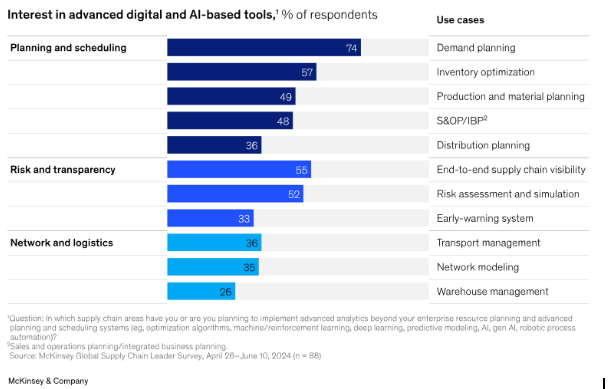
Cold storage centers and retail companies likewise benefit from WMS by improving inventory turnover rates and customer service through better stock management. Automation innovations incorporated with a WMS can likewise combine operations within a warehouse.

Latest Posts
Local Pickup Models: Optimizing Fulfillment Logistics for 2026
How to Align Live Stock across Diverse Platforms
Creating Flexible Omni-Channel Retail Logistics Networks